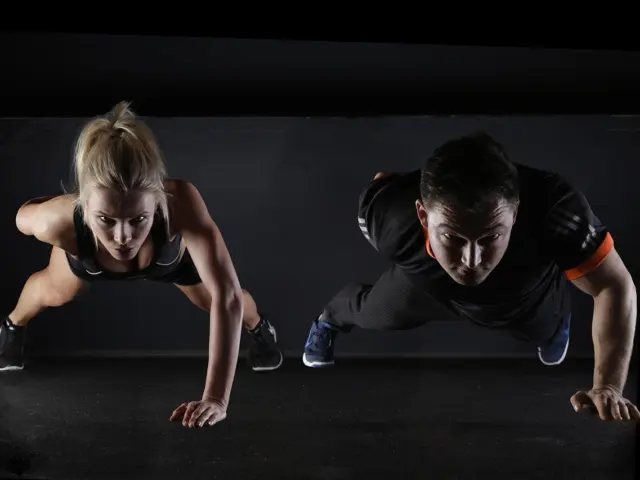
A resistance band shoulder workout trains the rotator cuff, deltoids and upper-back muscles. Choose a band you can control cleanly, and avoid training shoulders on consecutive days.
If you are new to training, read how to start working out first, then come back here for the shoulder-specific plan.
How bands load the shoulder
Resistance bands are elastic bands that add tension to an exercise, making it harder and engaging more muscles, according to Hinge Health’s physical therapy guidance. Tension builds as the band stretches, so the muscles work hardest at the end of each rep. That suits the shoulder, which depends on small stabilizing muscles as much as on big movers.

Rotator cuff
The rotator cuff is a group of four muscles: supraspinatus, infraspinatus, teres minor and subscapularis, as Taiclet’s shoulder guide describes. Hinge’s physical therapists note that bands are particularly good at strengthening smaller stabilizer muscles like these. In practice, this means rotation work belongs at the start of the session, with a light band, before heavier pressing.
Deltoids
Band shoulder exercises can build all three deltoid heads (anterior, lateral and posterior) while strengthening the rotator cuff and improving overhead stability. Raises train the front and side heads. Pull-aparts handle the rear head, which many desk-based routines neglect.
Scapular stabilizers and posture
The pulling moves in this plan cover the muscles around the shoulder blade. Squatwolf’s band guide says pull-aparts strengthen the rear delts and improve posture, and face pulls sit in the same pulling family. If your shoulders feel rounded forward, give these exercises as much priority as the press.
Choosing band tension
Match the band to the muscle, not to the exercise name. Small muscles such as the rotator cuff need far less resistance than the deltoids, so one band rarely suits a whole session. A typical set includes light, medium and heavy options, and a mixed set lets you move up or down within a single workout.
- Small muscles, light bands: for external and internal rotation, scaption, pull-aparts and Y-T-W raises, Taiclet lists flat therapy bands rated 2-12 lbs. External rotation specifically calls for a yellow or red flat band rated 2-5 lbs.
- Larger moves, heavier bands: overhead presses, banded push-ups and overhead carries use long loop bands rated 15-120 lbs. The shoulder press itself sits at 15-40 lbs with a long loop or tube band.
- Beginners: Squatwolf suggests light to medium loop bands for complete beginners. Start at the lighter end and let the range of the band, not your ego, set the load.
Do not trust colour alone. Green is often lighter and red often harder, but companies do not follow the same colour scheme, so read the rated resistance on the packaging. You can also change the load without buying a new band: shortening or lengthening the band increases or decreases resistance as you gain strength.
The workout in order
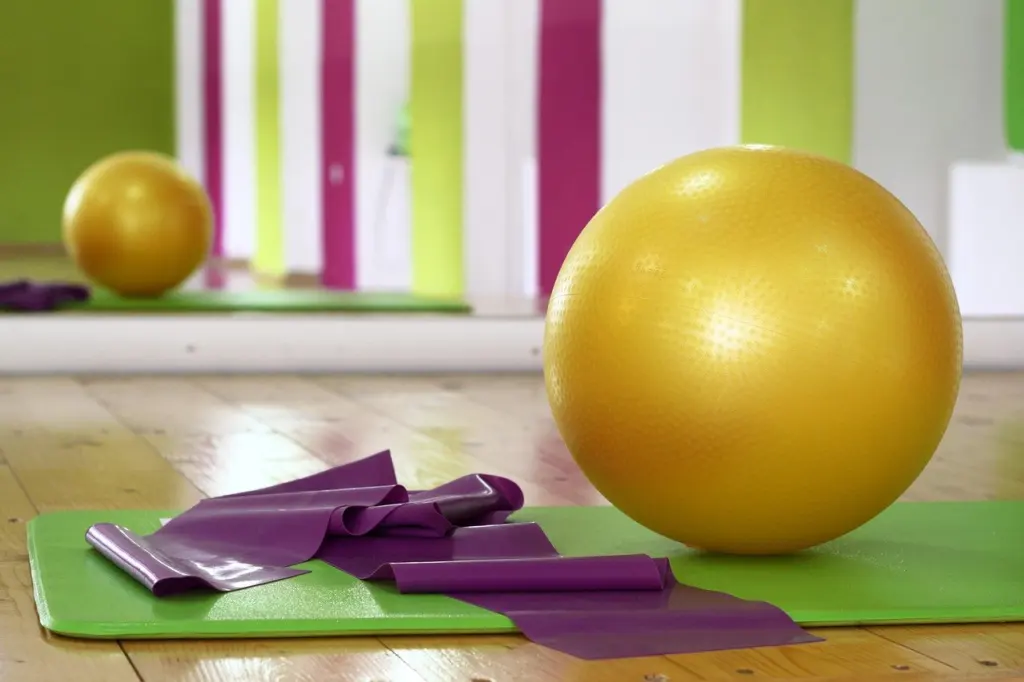
The order moves from the smallest muscles to the largest. Most shoulder exercises can be done standing with bands, so you need only floor space and an anchor point for the pulling moves. Do each exercise for the listed sets, resting briefly between them. Pull-aparts use 30 seconds of rest, and heavier bands call for longer rests.
| Exercise | Band type | Rated range | Sets x reps | Planning use |
|---|---|---|---|---|
| External rotation | Flat therapy band, yellow or red | 2-5 lbs | 3 x 15 | Rotator cuff activation; keep it the lightest work of the session |
| Band pull-apart | Flat therapy band | Within 2-12 lbs | 3 x 12-15 | Rear delts and posture; rest 30 seconds between sets |
| Scaption (raise to shoulder height) | Flat or light tube band | 3-8 lbs | 3 x 12 | Front and side deltoid work with a gentle load |
| Face pull | Tube or long loop band anchored at head height | 10-25 lbs | 3-4 x 15-20 | Upper-back and rear-shoulder volume; go for the higher reps |
| Overhead press | Long loop or tube band with handles | 15-40 lbs | 3-4 x 10-12 | Finishing strength work once the smaller muscles are warm |
Set ranges and dosing come from Taiclet’s band guide, with pull-apart sets, reps and rest from Squatwolf.
Step 1: External rotation
Use the lightest band in your set. Rotate the forearm outward from the shoulder, then return slowly. This is your rotator cuff exercise, so stop the set when the movement starts to speed up or the body twists.
Step 2: Pull-aparts
Hold the band in front of you and pull it apart toward the shoulder blades, then return under control. This move is the main posture exercise in the plan.
Step 3: Scaption
Stand on the centre of the band and raise your arms to shoulder height. The band is light, so stay strict rather than swinging to reach the top.
Step 4: Face pulls
Anchor the band at head height and pull toward the face. This has the highest rep range in the plan, so choose a band that lets you finish the final reps cleanly.
Step 5: Overhead press
Press overhead with a long loop or tube band. Because it is the heaviest movement, it goes last, when the rotator cuff and rear shoulder have already been worked.
If you want extra side-delt volume, swap in a banded lateral raise with a tube or flat band rated 8-20 lbs for 3 x 12-15. Hinge’s list of resisted shoulder exercises adds internal rotation, seated rows, forward raises and Y raises, which make good rotations through your weeks.
Form and setup
Poor form with resistance bands can lead to injury, so form is the priority at every load. Choose a band that lets the final reps stay smooth, and treat jerky starts or shrugging toward the ears as a signal to drop to a lighter band. Bands do not require your full range of motion in the way free weights often do, so you can work in a comfortable range on days when the shoulder feels tight.
Before each session, check the band for nicks or tears and make sure the anchor point is secure. If a movement causes sharp pain rather than muscular effort, stop and ask a clinician or physical therapist.
Frequency and progression
Do not train shoulders on consecutive days. Squatwolf’s guidance is that if you do shoulder band exercises on Monday, you should not train shoulders again the next day. If you go heavy, take more rest before the next shoulder session. Because this plan includes pressing, a heavier week is a reason to space sessions out more, not to add more.
Progress one variable at a time. First add reps within the listed range, then shorten the band, then move up to a heavier band. Once the sequence feels easy, the Resistance Band Workout Plan: Build Strength And Mobility In 4 Weeks (Easy At-Home Program) – Wholebodyreboot puts band work into a longer structure. For the rest of the body, pair this session with the 20-Minute Female Full-Body Home Workout: Build Strength, Burn Fat, And Feel Confident (No Equipment Needed) – Wholebodyreboot.
Frequently asked questions
How often should I do a band shoulder workout?
Avoid training shoulders on consecutive days, and allow extra rest after sessions with heavier bands.
Do I need a full range of motion with bands?
No. Unlike free weights, bands do not require you to use your entire range of motion, so you can work in a comfortable range.
Does band colour tell me how hard it is?
Not reliably. Green is often lighter and red often harder, but companies use different colour schemes, so check the rated resistance.
Which band should I use for stretching?
Use a lighter band. A very heavy one may not provide enough room to stretch, according to Hinge Health.