| Decision | Supported detail | Planning use |
|---|---|---|
| Equipment | Zero equipment; can be done in many places | Start with a patch of floor and no purchases. |
| Starting frequency | 3 days per week, then build toward daily movement | Begin with 3 days and add lighter movement on other days only after the routine feels manageable. |
| Full-body sessions | 3-4 sessions, at least 48 hours between intense efforts for the same muscles | Space your hard days so the same muscles are not trained hard back to back. |
| Muscle-building sets | 3-5 sets of 6-15 reps, 60-90 s rest | Choose an exercise variation hard enough that your reps land in this range. |
| Endurance sets | 2-4 sets of 15-25 reps, 30-45 s rest | Use this for stamina work or when an exercise is still easy. |
| Progression | Change tempo, range of motion or leverage before adding volume | Make the movement harder before piling on extra sets. |
Figures above come from the BodySpec bodyweight blueprint and the Mikolo morning bodyweight guide.
A bodyweight workout routine needs no equipment, and it keeps getting harder through leverage, tempo, range-of-motion and density changes rather than added plates.
If exercise is new to you, read about how to start working out first. The rest of this guide turns the table into a progression you can run on a living-room floor.
Can bodyweight training build strength on its own?
Yes, with one condition: the exercises must get harder over time. Bodyweight training has no plates to add, so progress comes from changing the exercise itself. Calisthenics program-design guidance describes four levers, and each one changes what you do on a given day:
- Leverage: change your body position so more weight sits over the working muscles. Moving from a knee push-up to a standard push-up, then to a decline push-up with feet elevated, shifts more load forward.
- Tempo: slow the lowering phase so the same rep demands more control.
- Range of motion: lengthen the movement, for example by raising your feet, so the muscles work through a bigger arc.
- Density: fit your work into less time. This suits you once the exercises themselves are comfortable.
The practical consequence is that adding reps forever stops being useful. BodySpec lists 3-5 sets of 6-15 reps with 60-90 s rest for muscle growth, and 2-4 sets of 15-25 reps with 30-45 s rest for muscular endurance. When a set finishes well above 15 reps, you are in endurance territory. Move to a harder variation if building muscle is the goal. Stay at the current level and shorten rest if stamina is what you want.
How often to train each week
Three full-body days a week is the sensible default. A full-body frequency of 3 days per week suits general conditioning, and morning-routine advice also starts at 3 days per week and builds toward daily movement. Your options depend on how much you want to train:
- Full-body, 3-4 sessions: the simplest layout. BodySpec asks for at least 48 hours between intense efforts for the same muscle groups, so place sessions on alternating days.
- Upper/lower split, 4 days: this spreads pushing and pulling work onto dedicated upper-body days, according to the same program-design source. It suits people who want more weekly volume and can commit to more days.
- Daily movement: treat this as a goal for light sessions, not for repeating hard circuits. Hard work on the same muscles still needs its gap.
On the lighter days, a short stretch session fits well. The Quick Morning Stretch Routine: 10 Minutes To Feel Energized Every Day – Wholebodyreboot is an easy way to keep moving between hard sessions.
The progression plan
The plan below is split into phases. Spread them across the whole plan and stay longer in whichever phase still feels demanding. Move on only when you finish every set with controlled tempo. The exercises come from the beginner-to-advanced ladders published by BodySpec, so you do not need to invent your own rep targets.
Foundation phase
Start with a beginner circuit of about 20 minutes. Do 2 rounds of the following, resting 60-90 seconds before each new round:
- Air squat: 12 reps.
- Knee push-up: 10 reps.
- Glute bridge: 15 reps.
- High plank: hold for 30 s.
Train on 3 days per week. The aim here is clean movement, not exhaustion.
Build phase
Swap knee push-ups for standard push-ups on your toes and add forward lunges at 10 each side, alternating legs, as in the Mikolo morning circuit. Replace the plain plank with plank shoulder taps for 30 seconds, which the same source says strengthens the core and stabilizers. Raise the number of sets toward 3-5 sets, keep reps within 6-15 reps, and rest 60-90 s.
Strength phase
Use leverage rather than extra volume. Choose decline push-ups with your feet elevated, reverse lunges for more glute focus, and a long-lever plank with hands reaching forward to lengthen the lever. Add split squats for single-leg work. Slow the lowering portion of each rep. Keep reps in the 6-15 range: if you pass it comfortably, the variation is too easy.
Challenge phase
Aim for the harder rungs: archer push-ups, jumping lunges or skater lunges, a plank walkout or hollow hold, and pistol-squat progressions. Single-leg and one-arm work is demanding, so do not rush it. If you prefer stamina over muscle size, keep an easier variation and use the endurance prescription of 2-4 sets, 15-25 reps and 30-45 s rest.
Tracking each week
Log your reps every session. As the Mikolo guide puts it, tracking reps helps you notice progress over time. Each week, compare your numbers with the last. If every set matches the top of your target range, move up one rung. If they dropped, repeat the week.
Exercise ladders: push-ups, squats, lunges and planks
Each pattern has a beginner entry and an advanced finish, so you can place yourself anywhere on the scale.
Push-ups
BodySpec’s ladder runs from knee push-up to standard, decline, archer and finally one-arm push-up. Standard, archer and pseudo-planche push-ups target the chest, front deltoids and triceps. Choose the rung where you can complete controlled reps within your target range, not the one that looks most impressive.
Squats and lunges
Knee-dominant lower-body options in the program-design guidance run from air squats to split squats to single-leg pistol progressions. Lunges give a second ladder: forward, reverse, jumping, skater and shrimp lunges. If you only have room for a few moves, a squat variation and a lunge variation cover the lower body well.

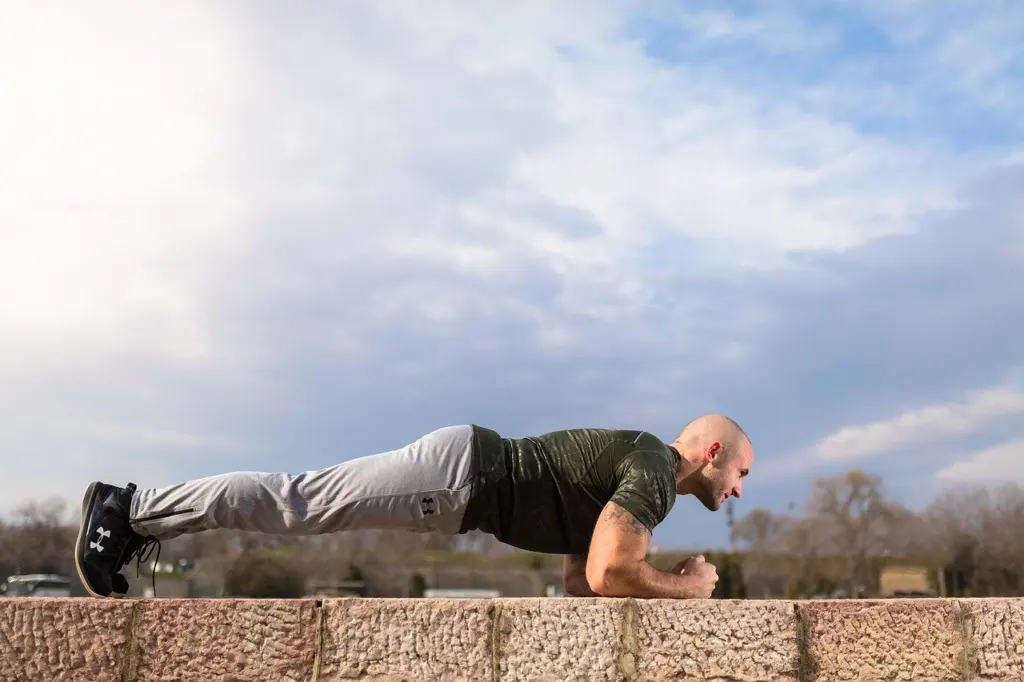
Planks
The plank ladder starts with the high plank, then moves to shoulder taps, long-lever planks, walkouts and the hollow hold. Each step makes your core resist more movement or work from a longer lever. Progress when the current hold stays steady and your hips stay level.
Where to go after the plan
Once the hardest rungs feel routine, you can keep progressing with the same levers, or add a resistance band for extra arm work. The Resistance Band Tricep Workout: 5 Effective Routines To Build Stronger Arms At Home (2026 Guide) – Wholebodyreboot builds on the push-up work in this plan.
Frequently asked questions
What should I check before adding pull variations?
Make sure the door frame, bar or support structure can fully support your bodyweight before you start any pull variation, as BodySpec advises.
How should I set up a high plank?
Place your hands under your shoulders and your feet hip-width apart. Squeeze your glutes and draw your rib cage down.
How deep should a forward lunge go?
Lower until both knees reach about 90 degrees, with the front knee stacked over the ankle and the back knee hovering above the floor.