You blend a smoothie after a workout, add a spoonful of turmeric and expect results by lunch. Anti-inflammatory smoothie recipes work better as whole-food meals or snacks built on berries, greens, ginger and turmeric than as quick fixes.
These blends fit into a wider eating pattern, so read them alongside guidance on how to eat a balanced diet. Below are berry-ginger, green and tropical recipes, a nutrition comparison, allergy swaps and timing advice.
Common mix-ups about anti-inflammatory smoothies
Most disappointment with these drinks comes from three assumptions. Correcting them makes the recipes easier to choose and use.
- “Several ingredients work together.” The recipes here combine several ingredients. The Love Yourself smoothie from Vegan Recipe Club blends berries, ginger, turmeric, ground flaxseed, leafy greens and plant milk. Ground flaxseed is the omega-3 ingredient in that blend, and the berries are its main antioxidant-rich fruit.
- “Healthy means low sugar.” Fruit-based blends still contain a lot of sugar, even with no added sweetener. The next section puts numbers on this so you can pick a blend that suits your day.
- “A smoothie treats inflammation.” A smoothie is a food, not a treatment. Anyone managing a health condition or taking medication should check with a clinician before making turmeric or ginger a daily habit.
With those points settled, the figures below show how far apart the blends really are.
Calories, fibre and sugar side by side
The four blends below differ most in fibre, protein and energy per serving. Sugar is much closer from one to the next.
| Blend (per serving) | Energy | Fibre | Sugar | Protein | Planning use |
|---|---|---|---|---|---|
| Blueberry-spinach | 382 kcal | 11.7 g | 36 g | 8 g | Highest in energy and protein, so it suits a meal replacement |
| Pineapple-mango-turmeric | 192 kcal | 4.8 g | 30.9 g | 3.2 g | Lightest option, but low in fibre and protein |
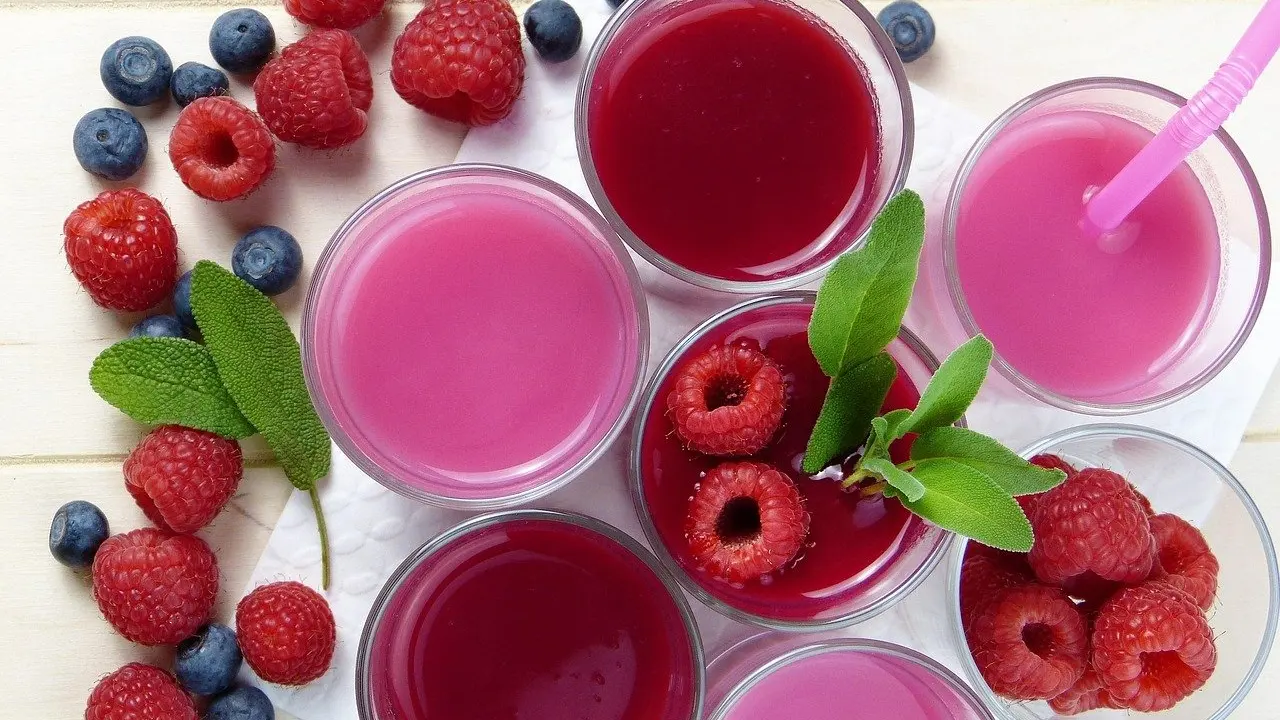
| Raspberry | 225 kcal | 15.7 g | 31.1 g | 4.7 g | Fibre leader of the four |
| Green berry | 238.55 kcal | 11 g | 24.84 g | 6.44 g | Lowest sugar of the four, with moderate protein |
Figures come from Kaurich Chiropractic’s recipe collection and Plant Based Mavens’ green smoothie.
The pineapple-mango blend has the fewest calories, yet its sugar sits close to the others while its fibre and protein are the lowest. It works as a light drink rather than something that will keep you full. The green berry blend is the better all-round pick when sugar is the concern.
How to make a berry ginger smoothie
The Love Yourself recipe is the fullest berry, ginger and turmeric template. Vegan Recipe Club lists these ingredients:
- Fruit: 1 ripe banana, frozen mixed berries and frozen blueberries.
- Greens: spinach or kale, plus celery and watercress.
- Seeds: 1-2 tbsp ground flaxseed.
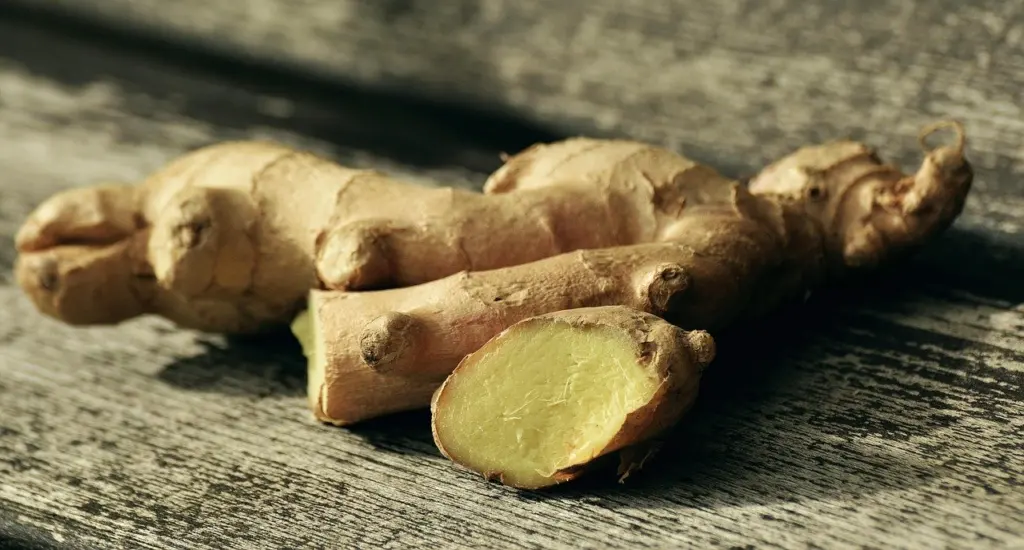
- Roots: 1-2 inches turmeric root or 1 tsp turmeric powder, and 1-2 inches ginger root.
- Liquid and finish: 250 ml plant milk and a pinch of black pepper.
- Pour the plant milk into the blender.
- Add the greens, celery and watercress.
- Add the banana, frozen berries, flaxseed, turmeric, ginger and black pepper.
- Blend until smooth.
The recipe also offers an optional nut butter, from 1 tsp to 1 tbsp, which can be left out. Because it gives no berry quantity, adjust the berries and plant milk until the texture suits you.
If you prefer fixed measures, the blueberry-spinach smoothie on Kaurich Chiropractic uses 1 large banana, 1 cup blueberries, 1 cup almond milk, 1 cup baby spinach, 1/4 tsp cinnamon and 1/4 tsp cayenne. It makes one serving in 5 minutes. Grating in some ginger from the recipe above turns it into a berry-ginger blend with exact quantities for the rest.
Green berry smoothie for breakfast, post-workout or snacks
The Plant Based Mavens green smoothie is suggested for breakfast, to refuel after a workout, or as a snack at any time. That flexibility suits a drink with 11 g fibre and 6.44 g protein per serving. It holds up better than the pineapple blend for a morning meal.
Greens are easy to rotate. The Love Yourself blend takes spinach or kale along with celery and watercress, and the blueberry blend uses baby spinach. Whichever you choose, put the greens in with the liquid first so they break down fully.
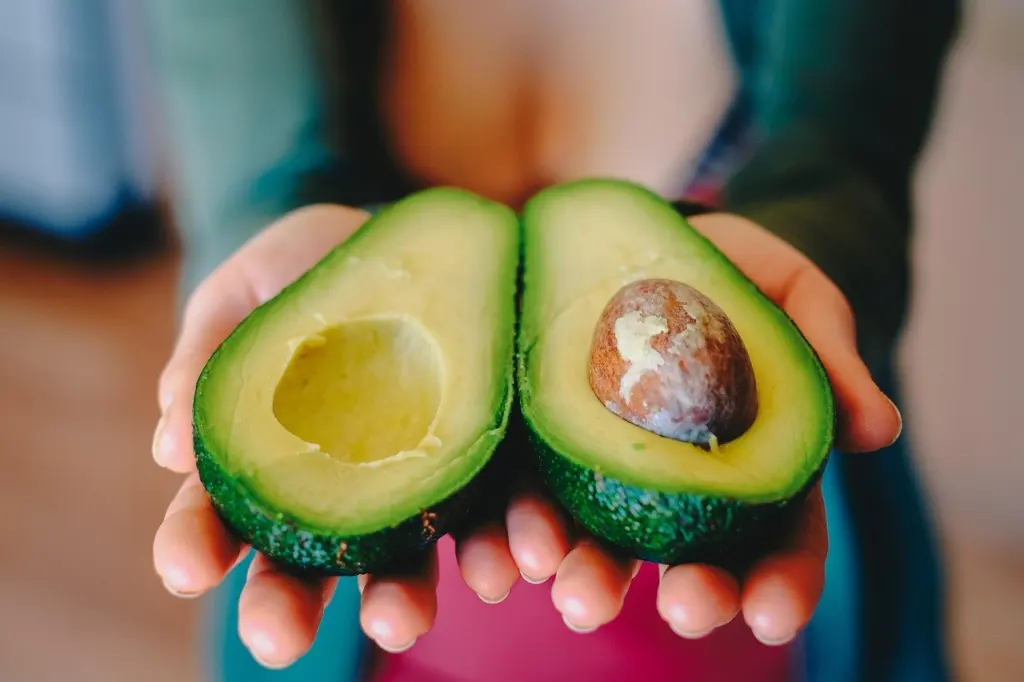
Avocado is a popular addition for a creamy texture. Once you add it, the nutrition numbers quoted for the green smoothie no longer apply, so treat the numbers as a guide only.
Tropical turmeric smoothie and a citrus alternative
For a fruit-forward blend, Honest and Tasty combines banana, 1 1/4 cups frozen pineapple, 1 cup frozen mango, 1 tsp ground turmeric, 1/2 cup coconut water and an optional 1/4 cup full-fat coconut milk. Prep and total time is 5 minutes. The recipe makes two servings, and each serving provides:
- Energy and carbohydrate: 224 kcal, 43 g carbohydrate, 5 g fibre and 30 g sugar.
- Protein and fat: 3 g protein and 7 g fat, 6 g of it saturated.
- Minerals: 70 mg sodium and 700 mg potassium.
- Vitamins: 86 mg vitamin C and 990 IU vitamin A, the nearest thing to an antioxidant marker in this pack.
The coconut milk is optional but recommended by the source. To cut fat, leave it out, since the rest of the recipe is fruit, turmeric and coconut water.
The Kaurich pineapple-mango version is leaner at 192 kcal. It uses 1 1/2 cups pineapple, 1/2 cup mango, 1/2 cup low-calorie coconut milk, 1 tsp turmeric and 1 cup ice cubes.
When you want more protein, Kitchen Shift’s citrus blend is the alternative. It uses 1 orange, 1/3 cup frozen pineapple, 2 scoops vanilla protein powder, 1 tsp turmeric, 1 tsp fresh ginger root, 1 tsp cinnamon, 16 oz almond milk and ice. The protein powder it recommends is plant-based.
Swapping ingredients for allergies
Most swaps involve nuts, coconut or protein powder. Ask a clinician or allergist about severe allergies, and always read labels on packaged ingredients.
- Nut butter: the Love Yourself recipe says to leave the optional nut butter out if there are nut allergies.
- Almond milk: the blueberry and citrus recipes use almond milk. The Love Yourself recipe asks only for 250 ml of plant milk, so a different plant milk is the first change for a nut allergy.
- Coconut milk: it is optional in the tropical recipe, so the blend works without it. Coconut water in the same recipe is a separate ingredient to check.
- Protein powder: the citrus recipe’s powder is described by its source as plant-based and smooth. Check the label of whichever powder you substitute.
Matching a blend to the time of day
- Breakfast: the blueberry-spinach blend at 382 kcal and 8 g protein comes closest to a meal. The green berry blend is the lighter breakfast option.
- After exercise: the citrus blend with 2 scoops of protein powder gives you the most protein, while the green smoothie is also suggested for refuelling.
- Afternoon snack: the pineapple-mango blend at 192 kcal keeps energy intake low. Add something with fibre or protein if it needs to hold you over.
If you are building a full week of meals, the Clean Eating Meal Plan For Weight Loss: A Simple 21-Day Plan To Lose Weight Sustainably – Wholebodyreboot shows where a smoothie can replace a meal. For plant-based mornings that need more staying power, see High-Protein Vegan Breakfast Ideas: Energy-Packed Recipes & Time-Saving Tips For 2026 – Wholebodyreboot.
Frequently asked questions
| Question | Answer |
|---|---|
| Why add black pepper to a turmeric smoothie? | The Love Yourself recipe lists a pinch of black pepper because it helps with the absorption of turmeric. No quantity is given beyond a pinch. |
| Can I use turmeric powder instead of fresh root? | Yes. The same recipe accepts 1-2 inches of turmeric root or 1 tsp of powder, while ginger is listed as 1-2 inches of root. |
| How long does a smoothie take to make? | The blueberry-spinach recipe and the tropical recipe both list 5 minutes in total. |
| Does a smoothie need protein powder? | No. The blueberry-spinach blend provides 8 g protein without it. The citrus blend adds 2 scoops of vanilla plant-based protein powder for a higher-protein version. |