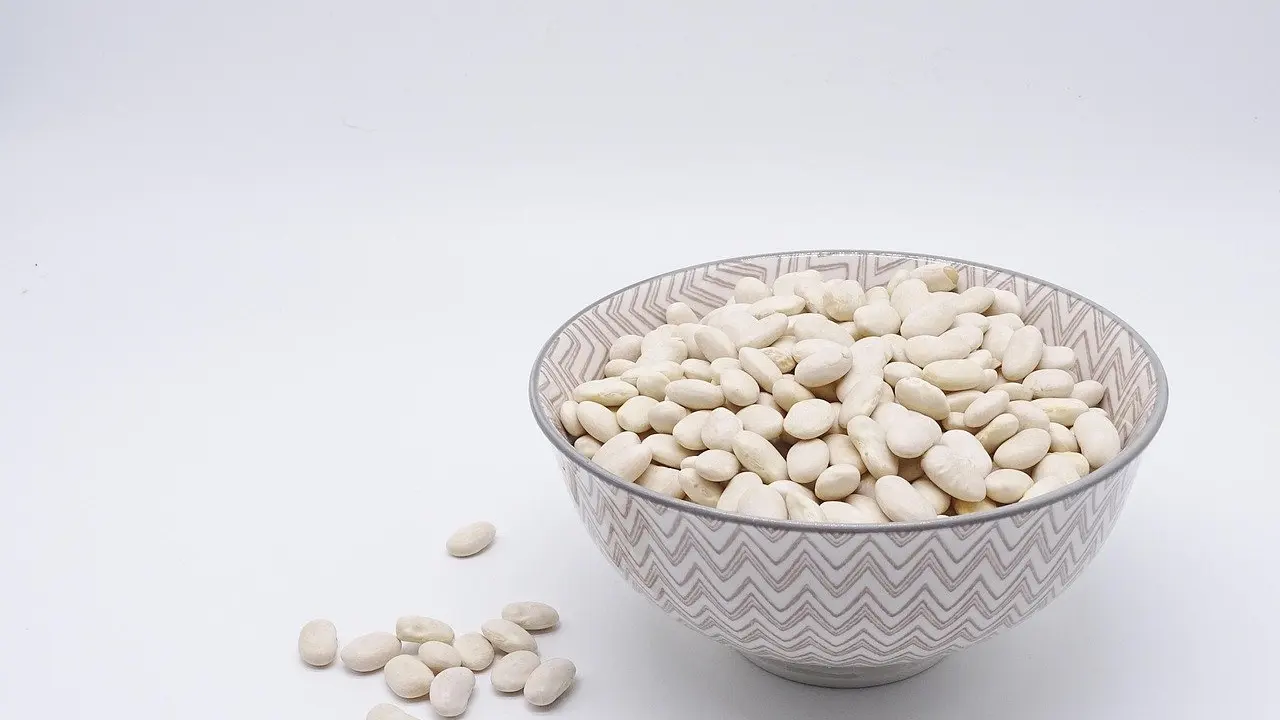
Standing in the grocery aisle asking what foods are rich in fiber? Choose beans, lentils, whole grains, fruit, vegetables, nuts and seeds. Refined white bread and white rice have lost most of their fiber, and meat, dairy and sugar contain none.
Fiber is one piece of how to eat a how to eat a balanced diet question, and the sections below turn it into food choices you can use at the shop and the stove.
Common fiber myths, corrected
Most confusion about fiber comes from a few assumptions that do not hold up. Fiber, also called roughage, is the part of plant-based foods that the body cannot break down, according to HelpGuide. It turns up in grains, fruits, vegetables, nuts and beans.
- “Fiber is a nutrient the body absorbs.” Fiber is a type of carbohydrate that the body can’t digest, as the Harvard T.H. Chan School of Public Health explains. It passes through undigested, and that is exactly why it affects digestion.
- “Anything made from grain has fiber.” White bread, white rice and pastries have had all or most of their fiber removed during refining. The more natural and unprocessed a food is, the higher it tends to be in fiber.
- “Animal foods contribute some.” Meat, dairy and sugar contain no fiber, so a plate built around them needs plant foods alongside to add any.
- “There is only one kind of fiber.” There are two main types that behave differently, which the next section compares.
Soluble versus insoluble fiber
Soluble fiber dissolves in water and insoluble fiber does not. That single difference explains why they do different jobs in the body, and why a varied diet beats focusing on one type.
| Feature | Soluble fiber | Insoluble fiber | Planning use |
|---|---|---|---|
| In water | Dissolves | Does not dissolve | Both types matter, so aim for variety across food groups. |
| Main job | Can help lower glucose levels and blood cholesterol | Can help food move through the digestive system | Lean on soluble fiber when cholesterol or blood sugar is the concern; lean on insoluble fiber for regularity. |
| Foods to reach for | Oatmeal, chia seeds, nuts, beans, lentils, apples, blueberries | Unrefined plant foods rather than refined ones | Start with a soluble-fiber breakfast and keep refined products to a minimum. |
The definitions and the soluble-fiber food list come from Harvard’s Nutrition Source.
Highest-fiber foods by group
The National Cancer Institute and Harvard both point to the same families of foods: legumes, fruit and vegetables, whole grains, and nuts and seeds. The lists below group them so you can pick one or two from each rather than relying on a single food.
Beans, lentils and peas
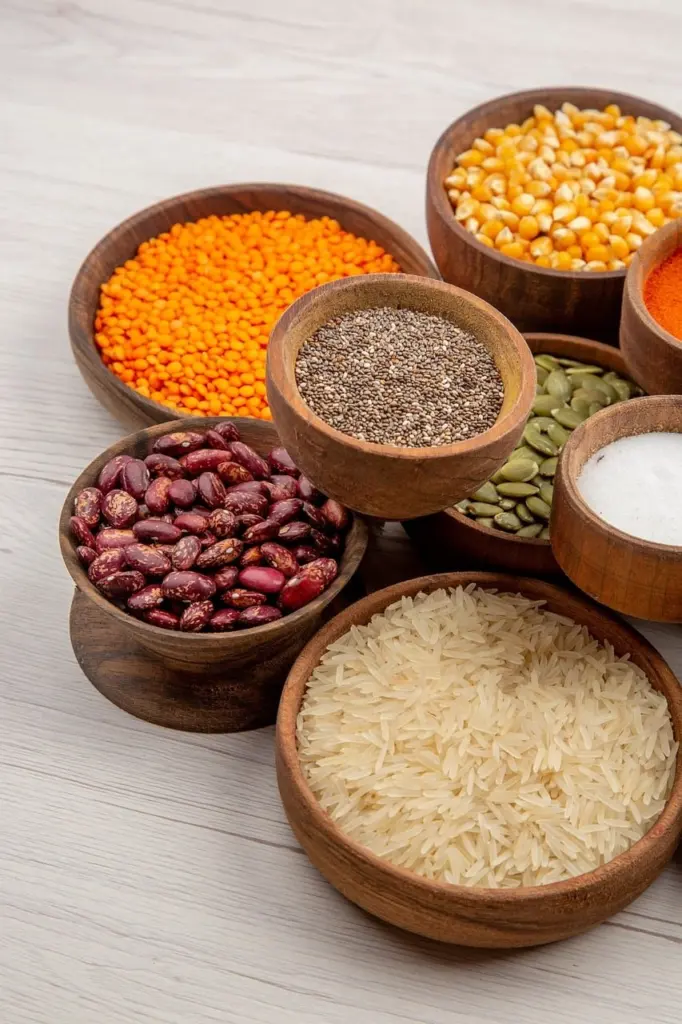
Legumes are the most dependable starting point. The National Cancer Institute names cooked dried or canned peas and beans, such as lentils or pinto, black, red or kidney beans, among its high-fiber foods. Harvard also lists beans and lentils as soluble-fiber sources, so they serve both digestion and cholesterol goals.
Fruit and vegetables
The National Cancer Institute’s list includes apples, berries, broccoli, Brussels sprouts, cabbage, corn, peas, potatoes with skins, and sweet potatoes or yams. Harvard adds apples and blueberries to its soluble-fiber foods. Where a skin is edible, keep it on; the potato example shows why the skin appears in the list.
Whole grains and breakfast cereals
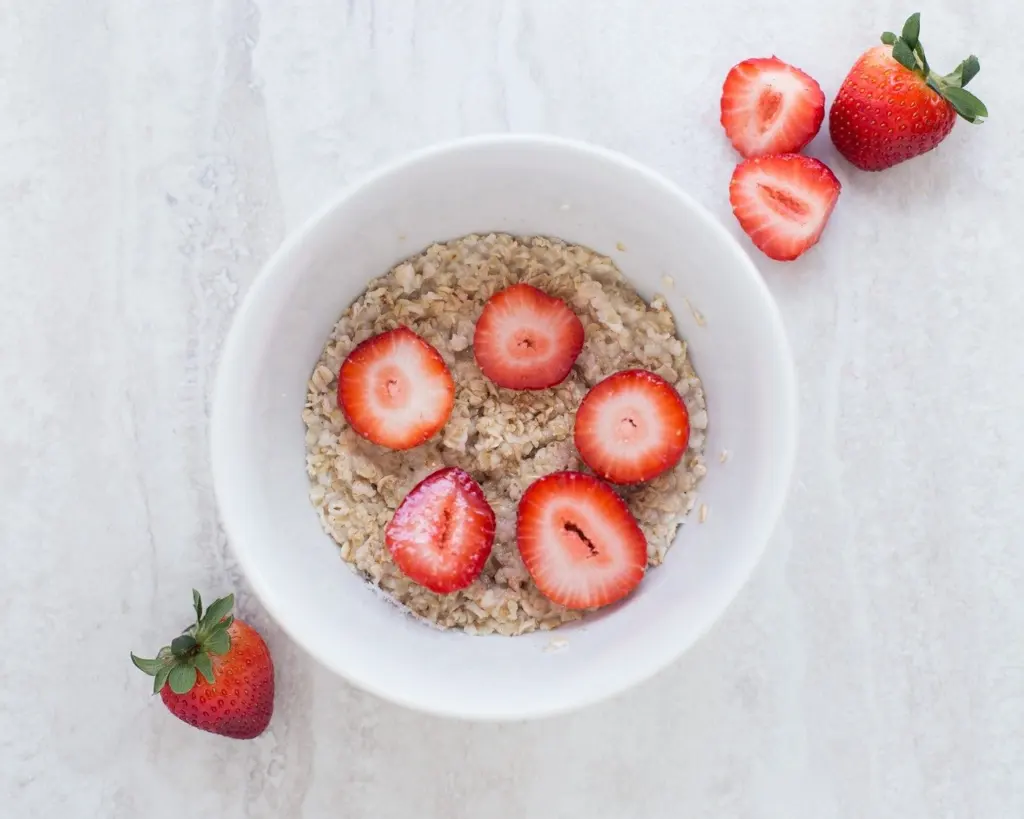
For breakfast, the National Cancer Institute points to bran cereals and whole-grain cereals such as oatmeal and shredded wheat. For cooking at other meals, Harvard describes minimally refined whole grains, which keep the germ, bran and endosperm, and names steel-cut oats, quinoa, brown rice, millet, barley and buckwheat. Swapping a refined grain for one of these is the simplest way to raise fiber without changing what you eat.
Nuts, seeds and snacks
Harvard lists nuts and chia seeds as soluble-fiber foods, and the National Cancer Institute adds seeds such as pumpkin or sunflower to its snack list. Sprinkling seeds on yogurt or oatmeal adds fiber without a separate preparation step. For ideas that pair fiber with protein, see Protein-Packed Snacks: 15 Fast, Healthy Ideas To Fuel Your Day (2026) – Wholebodyreboot.
How much fiber you need each day
Children and adults need at least 25 to 35 grams of fiber per day for good health, according to Harvard’s Nutrition Source. Most Americans get only about 15 grams a day, so the usual gap is large and closing it takes a change in the whole day’s food choices, not one extra serving.
Treat the range as a floor, not a ceiling. A realistic route is to upgrade what you already eat: a whole-grain cereal in the morning, beans or lentils in a main meal, fruit and vegetables with skins where possible, and seeds or nuts as a snack. Read the fiber line on nutrition labels when two products look similar, since the label shows which one actually delivers more.
Fiber, digestion and heart health
Insoluble fiber helps food move through the digestive system, while soluble fiber can help lower glucose levels and blood cholesterol. The cholesterol effect has been tested: a meta-analysis of 67 controlled trials found a modest benefit of dietary soluble fiber in lowering total and LDL cholesterol, as summarised by Harvard. Modest is the key word; fiber supports a heart-healthy pattern but does not replace the rest of it.
Larger studies of eating patterns add context. A high intake of dietary fiber is associated with a lower risk of heart disease, but that finding comes from observational research, which shows an association and does not prove cause. The practical message is to choose fiber-rich whole foods for their overall value, not to expect a guaranteed result from any single food.
Easy swaps that add fiber
The best swaps replace a low-fiber food with a higher-fiber one in the same role, so meals stay familiar.
- Refined for whole grain. Trade white bread, white rice and pastries for whole-grain versions, or for grains such as barley, quinoa or brown rice.
- Cereal upgrade. Move from a refined breakfast cereal to oatmeal, shredded wheat or a bran cereal.
- Legumes in the main dish. Add lentils or beans to soups, salads and stews, using canned if that is what fits your week.
- Skin on. Keep the skin on potatoes and sweet potatoes, and eat apples and berries whole.
- Seeds as a topping. Stir chia seeds or pumpkin seeds into yogurt or oatmeal.
Cooking a pot of beans or grains once and using it through the week makes these swaps easier to keep. The batch-cooking approach in Whole Food Meal Prep Made Simple: A Practical 5-Day Plan to Eat Better With Less Stress – Wholebodyreboot suits this well.
Adding fiber without bloating
Bloating is the most common reason people give up on a higher-fiber diet, and it usually reflects how fast and from which foods fiber is added. People with irritable bowel syndrome (IBS) may be sensitive to some fibers, such as inulin and oligosaccharide-type fibers, which can cause bloating or stomach upset, according to Harvard.
A sensible approach follows from that. Add a new fiber-rich food at a time instead of changing every meal at once, so you can tell which food is responsible if something bothers you. Favour whole foods over products that list added fibers. If symptoms persist or you have IBS, a registered dietitian or doctor can tailor the plan.
Frequently asked questions
| Question | Answer |
|---|---|
| Do canned beans count as much as dried beans? | Yes. The National Cancer Institute lists cooked dried or canned peas and beans together as high-fiber foods. |
| Is roughage the same as fiber? | Yes. HelpGuide frames fiber as a plant component that travels through the gut without being broken down. |
| Which whole grains are most linked with lower diabetes risk? | Harvard reports that high-fiber whole grains such as brown rice, rye, oats and wheat bran are most strongly associated with a lower risk of type 2 diabetes, based on its fiber review. |
| Do popcorn, granola and snack bars count as fiber snacks? | They can. The National Cancer Institute names popcorn, granola and bran snack bars alongside nuts and seeds in its high-fiber foods list. |