| Protein source | Protein figure | Planning use |
|---|---|---|
| Tofu or tempeh | 10-20 g per serving | Best savory anchor for a scramble or a cooked plate |
| Lentils, cooked | 18 g per cup | Strongest legume for a bowl; cook ahead and reheat |
| Chickpeas | about 15 g per cup | Whole-food reference for chickpea flour dishes |
| Quinoa | about 8 g per cup | Supporting base for a warm bowl, not the protein engine |
| Nuts and seeds, including hemp seeds | 5-8 g per handful | Topping that lifts oats, smoothies and bowls |
These figures come from ProVeg’s guide to protein on a plant-based diet; for a specific brand or cut, check USDA FoodData Central.
The best high protein vegan breakfast ideas build on a single dense base, such as tofu, chickpeas, lentils or hemp seeds, then add toppings. The grams above are per ingredient, so plan a plate by combining components.
Breakfast is one part of how to eat a balanced diet, so use these ideas alongside the wider guide rather than as a rule for every meal.
Choosing a base for your morning
The base you pick decides how much protein the plate delivers and how much effort the morning takes. Vegans get protein at breakfast by starting from a dense food and treating everything else as a supporting extra.
- Choose tofu or tempeh for a savory plate. They are among the most protein-dense plant foods, at 10-20 g per serving, and they cook quickly with vegetables and spices.
- Choose lentils or chickpeas for a hearty bowl. Cooked lentils give 18 g per cup and chickpeas about 15 g per cup. This suits people who cook grains and legumes ahead and want a breakfast that reheats.
- Use quinoa as a partner, not the main source. At about 8 g per cup it is useful in a warm bowl but needs a legume, tofu or seeds beside it to make the plate high in protein.
- Add nuts and seeds last. A handful gives 5-8 g, and hemp seeds can simply be sprinkled onto meals. They are the easiest way to raise a plate that is almost there.
Sweet-leaning mornings work too. ProVeg suggests a tofu scramble, chia pudding or oatmeal with peanut butter as protein-rich ways to start the day, which covers savory, make-ahead and warm options.
How breakfast fits a daily protein target
A breakfast built on tofu, legumes or seeds can cover a large share of a day’s protein, which makes the rest of the day easier to plan. ProVeg cites the European Food Safety Authority reference for adults of 0.83 grams of protein per kilogram of body weight per day, which works out to about 58 g daily for a person weighing 70 kg.
Treat that figure as a general adult reference rather than a personal prescription. Needs differ with body size, and anyone with a medical condition or a heavy training load should ask a registered dietitian. If the terms protein, carbohydrate and fat are unfamiliar, a short explainer on what are macronutrients gives the background for reading a food label.
Tofu scramble and other savory plates
A tofu scramble is the simplest high-protein vegan breakfast because the tofu itself carries the protein, at 10-20 g per serving for tofu and tempeh. Crumble firm tofu into a hot, lightly oiled pan, season it generously, and cook until it is heated through and slightly dry at the edges. Stir in spinach, tomatoes or mushrooms near the end so they stay bright.
Serve it with fruit on the side for a balanced plate, and add a spoonful of cooked lentils if you want the protein to go further. Lentils bring 18 g per cup cooked, so a modest scoop makes a visible difference without changing the flavor much.
This option suits people who are home for a few minutes and prefer cooking fresh to preparing the night before. If your mornings are tighter than that, choose one of the make-ahead plates below.
Chickpea flour omelette
A chickpea flour omelette is a good egg-free savory option because chickpeas are a solid legume source, at about 15 g of protein per cup. Chickpea flour is milled from chickpeas, so use the grams on the pack for the flour itself and the whole-chickpea figure only as a reference point.
Whisk the flour with water and a little salt and spice until the batter pours smoothly, then let it rest briefly so the flour hydrates. Pour it thinly into a hot, oiled non-stick pan, flip when the edges set, and fill with vegetables.
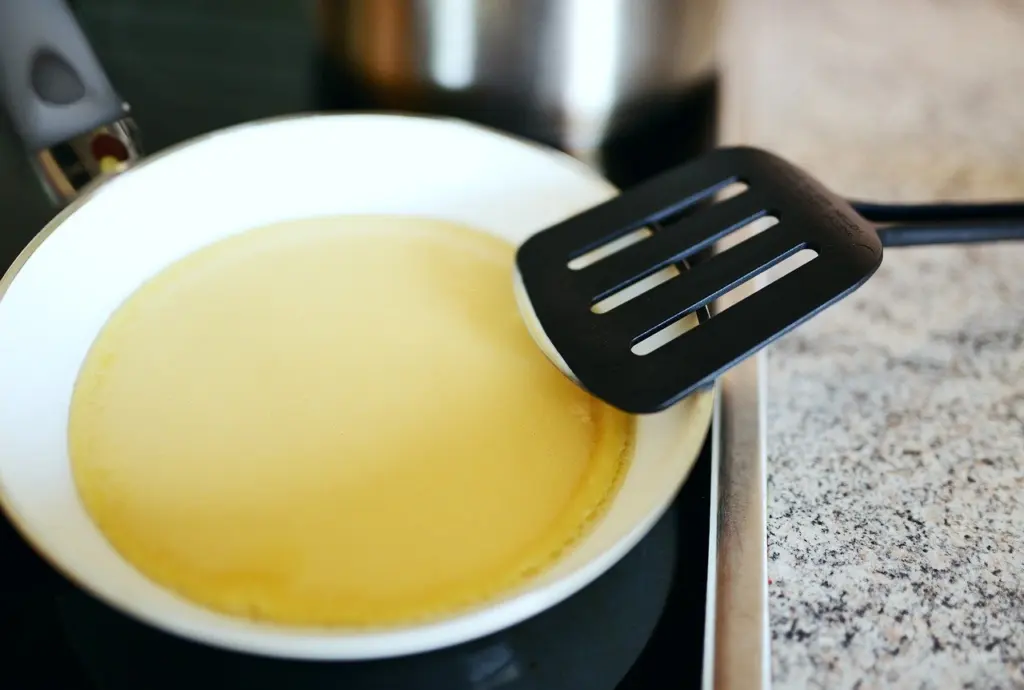
For more protein, fill it with crumbled tofu or serve it beside lentils. The batter alone is a moderate source, so the filling is where you decide whether the plate becomes high in protein.
Overnight oats with hemp seeds
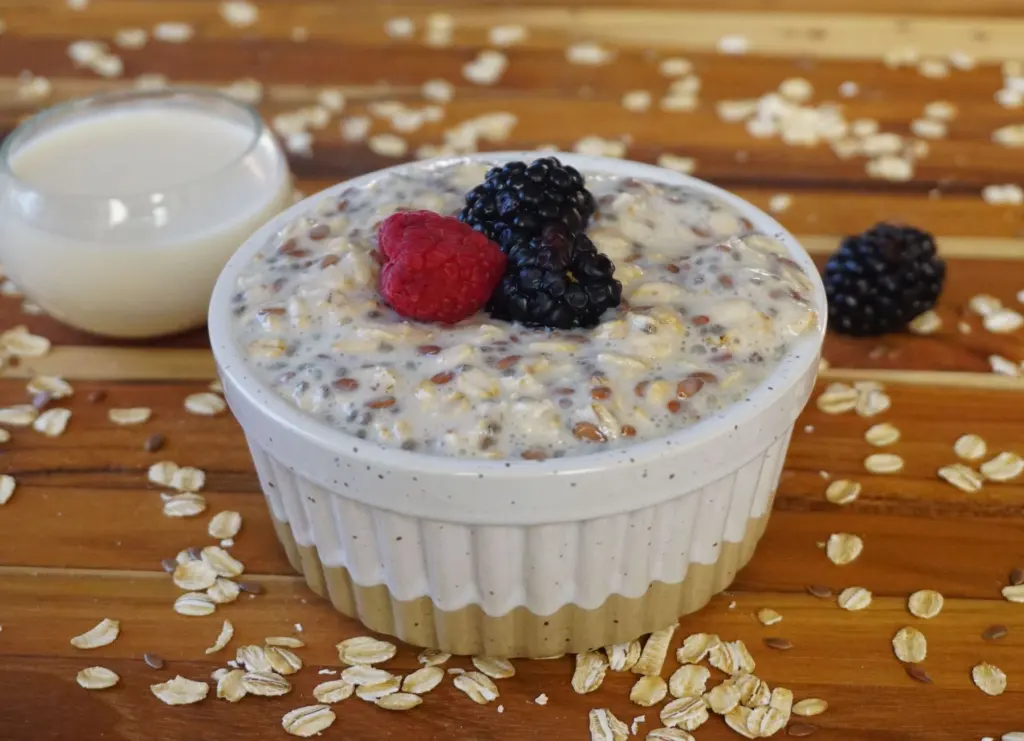
Overnight oats suit people who want breakfast waiting in the fridge. Combine rolled oats with a plant milk in a jar, stir in hemp seeds, and leave it covered overnight. In the morning, top it with fruit and a spoonful of peanut butter, one of the pairings ProVeg lists for oatmeal.
Hemp seeds do the heavy lifting here, and nuts and seeds supply 5-8 g per handful, so a generous sprinkle is a reasonable way to raise a jar that would otherwise be mostly oats. Oats alone are a modest protein source, so do not rely on them and expect a high-protein result. If you want a bigger jar, add chia or more seeds before reaching for anything else.
This plate suits people who dislike cooking before work, and it adapts to whatever fruit is in the house.
Prep time and make-ahead choices
Prep time is the real deciding factor on a busy morning, and the fastest options split into night-before jobs and blender jobs. The supported timings are short, so none of these needs a long weekend session.
- Chia pudding: about ten minutes the night before, according to Frei Style’s breakfast guide, then nothing in the morning.
- Beetroot apple smoothie: 10 minutes in the blender, from the same guide. It suits mornings when you would rather drink than sit down.
- Tofu scramble and chickpea flour omelette: cooked fresh in the pan. Pick these when you have a few spare minutes and want a hot plate.
- Overnight oats: assembled the evening before in a jar. Top them in the morning so the seeds and fruit stay crisp and fresh.
If blended breakfasts are your preference, the Anti-Inflammatory Smoothie Recipes: 3 Easy Blends To Reduce Inflammation And Boost Energy – Wholebodyreboot guide has more ideas. Add tofu or a seed topping to any smoothie if protein is your goal, because fruit alone will not supply much.
How plant proteins add up across the day
Plant proteins do not need to be paired at breakfast to be complete. ProVeg notes that as long as you eat a varied diet throughout the day, your body can get all the amino acids it needs.
In practice, a breakfast built on tofu or legumes does not have to be perfectly balanced by itself. Judge variety across the whole day, using grains, legumes, nuts, seeds and soy foods in different meals, and use breakfast to anchor the protein total.
Frequently asked questions
What is a quick high-protein vegan breakfast?
Chia pudding is among the quickest options, since it is prepped the night before. Tofu and tempeh are among the most protein-dense plant foods.
Do I need protein powder?
No. Breakfast collections such as Vegan Lovlie’s recipes are built without relying on protein powders, and Frei Style says the answer to a protein-rich breakfast is not a tub of powder. Powder remains an optional extra if you like it in oats or smoothies, as Flora and Vino suggests.
Where can I check the protein in my own ingredients?
Use USDA FoodData Central, the USDA’s food composition database, managed by the Agricultural Research Service’s Beltsville Human Nutrition Research Center. Its data are public domain, and the USDA asks that users list FoodData Central as the source.