A clean eating meal plan for weight loss works when whole-food meals add up to a calorie deficit. Food quality helps you stay full and keep going, but the deficit drives the loss, and it should never come at the cost of nutrition.
This guide explains how the approach works, how to size meals, what a week of meals can look like and what to buy. For the wider picture of how to eat a balanced diet, start with the Healthy Eating Basics hub.
What clean eating means
Clean eating is a way of eating built around nutrient-dense whole foods, not a named diet. Hungryroot describes it as fruits, vegetables, lean meat, whole grains, protein and healthy fats, while avoiding processed additives and preservatives. Australian Eggs puts it as choosing minimally processed whole foods with little to no additives, including preservatives, colours and flavours.
The two descriptions overlap, but Healthloft points out that there is no universally accepted definition. In practice, that means you set the rules yourself. A sensible rule is to build most meals from recognisable ingredients, keep ingredient lists short and let the plate, not a label, decide whether a meal fits.
How clean eating supports weight loss
Clean eating helps with weight loss mainly by making a calorie deficit easier to live with. It is not a shortcut around the deficit itself.
The calorie deficit does the work
Weight loss occurs when the body uses more energy than it receives from food, according to Pantheon Clinical. The same source warns that cutting calories without attention to nutrition may lead to fatigue, hunger and difficulty maintaining the plan long term. A plan that leaves you tired and hungry by midweek is a poor plan, however low its numbers are.
Where whole foods help
Whole-food meals do their job through the plate. Filling half of it with fruits and vegetables, as Healthloft suggests, leaves less room for energy-dense extras. Examples include leafy greens, broccoli, berries and apples. Pair that with a protein source and a whole grain and the meal stays filling without relying on willpower.
Clean eating also does not need to be all-or-nothing. Healthloft notes that more balanced versions are often easier to maintain long term. That matters for weight loss, because the plan has to survive busy weeks, restaurant meals and tired evenings.
Protein at each meal
Protein is described by Healthloft as the most satiating macronutrient, which is why lean protein anchors each meal in this plan. Pantheon Clinical gives a commonly recommended range for fat loss of about 1.6 to 2.2 g of protein per kg of body weight per day. For a 70 kg adult that is roughly 112 to 154 g daily. Treat the range as a general guide, and spread protein across the day rather than loading it into dinner.
Setting your calorie target
Your calorie needs depend on you, so there is no single correct number to copy. Australian Eggs notes that energy requirements vary with age, activity, health status, height and weight. A tall, active person and a smaller, sedentary person will land on different targets even on the same plan.
The Australian Eggs sample plan provides an average of 8700 kilojoules per day. That is a description of one meal plan, not a personal target, and it should not be copied as a ceiling or a goal. Use it as a reference point for what a clean eating day can look like, then adjust portions up or down to suit your body and activity. If you have a health condition, or are unsure where to start, a doctor or registered dietitian can set a number for you.
A practical check is how you feel. If you are constantly hungry or fatigued, the plan is too lean on food or on nutrition, and the problem Pantheon Clinical describes is showing up. Increase the vegetables and protein before cutting anything else.
Portion guide and reference meals
Portion sizes are easiest to learn from real meals with known amounts. The table below shows reference meals with published portions, so you can see how much food a single clean eating plate contains and judge how it compares with your own.
| Reference meal | Portion | Energy and protein | Planning use |
|---|---|---|---|
| Loaded quinoa breakfast bowl | 1 serving | 475 kcal, 13 g fat | A whole-grain breakfast that carries you through the morning |
| Saucy Mediterranean chicken with rice | 3/4 cup chicken with 3/4 cup rice | 394 kcal, 27 g protein | A template for a dinner with lean protein and a grain |
| Veggie steak salad | 2 cups | 301 kcal, 21 g protein | A lighter lunch with vegetables as the bulk |
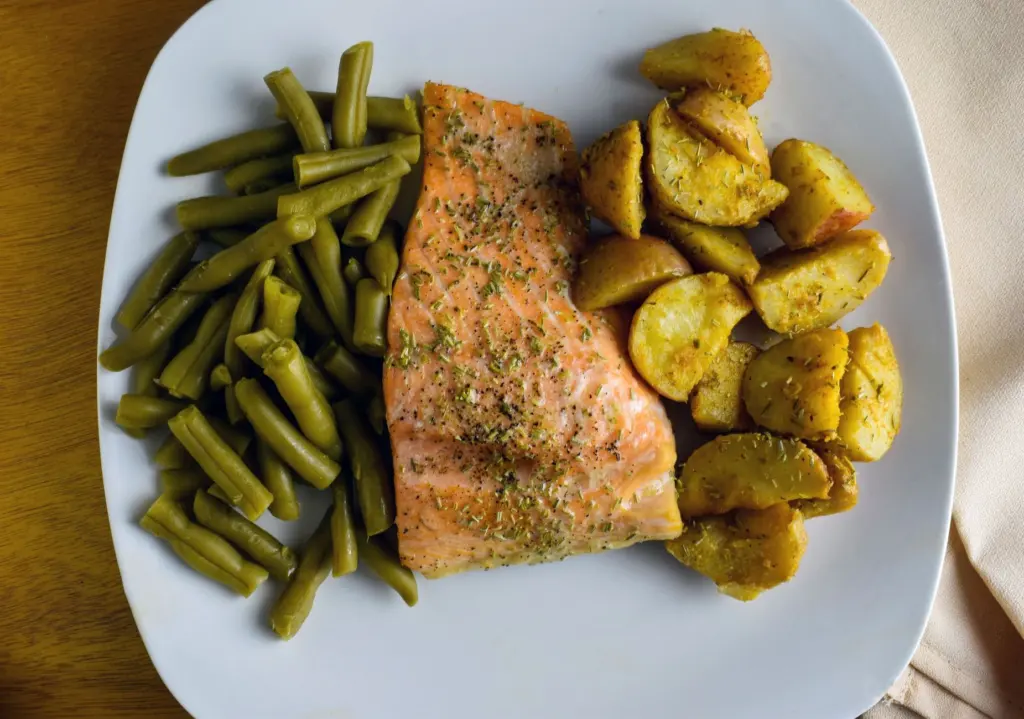
| Grilled salmon fillet with salad and sweet potato mash | 100 g salmon with 2 cups salad | Plan average of 8700 kJ per day | A fish dinner portion within a balanced day |
Figures come from the Taste of Home clean eating collection and the Australian Eggs clean eating meal plan.
The meals differ in size, so choose them by role. The breakfast bowl is the most energy-dense, while the steak salad suits a lighter midday meal. Whichever you pick, keep the half-plate-of-vegetables rule in mind and add vegetables where a recipe is light on them.
A week of clean eating meals
A week is the right unit for planning because shopping and cooking happen weekly. Australian Eggs builds its plan around 2 serves of fatty fish and 12 eggs per week, which gives a useful pattern: fish and eggs supply protein, and the rest of the plate is vegetables and whole grains. The outline below uses foods from the sources above, so adjust amounts to your own calorie target.
- Monday: scrambled eggs (3) with spinach and one slice of whole-grain toast, a salad with canned beans for lunch, and chicken with rice and vegetables for dinner.
- Tuesday: a loaded quinoa breakfast bowl, veggie steak salad for lunch, and grilled salmon with salad and sweet potato mash.
- Wednesday: nut butter on whole-grain toast with fruit, a lentil-based lunch with salad greens, and Mediterranean chicken with rice.
- Thursday: eggs with spinach again, rotisserie chicken over pre-washed greens, and fish with roasted vegetables.
- Friday: the quinoa bowl, a bean and vegetable bowl, and chicken or fish with a whole grain.
- Weekend: reuse prepared ingredients, keep protein and vegetables in every meal, and swap in a meal you enjoy that fits the half-plate rule.
To keep the plan going beyond a week, run the same rotation again and change one thing at a time, such as the vegetable or the protein. That keeps shopping simple while avoiding boredom. If you prefer a blended breakfast, the Anti-Inflammatory Smoothie Recipes: 3 Easy Blends To Reduce Inflammation And Boost Energy – Wholebodyreboot guide offers options to slot into the morning.
Weekly grocery list
A short, repeatable list keeps the plan cheap and removes decisions at the shop. Build it around the food groups used in the plan above.
- Vegetables: spinach, other leafy greens, broccoli and pre-washed salad greens for fast lunches. Frozen vegetables and fruit are a practical backup.
- Fruit: berries and apples cover most breakfasts and snacks.
- Proteins: eggs, fatty fish such as salmon, chicken, canned beans, canned lentils and rotisserie chicken for nights with no time to cook.
- Grains and starches: quinoa, rice, whole-grain bread and sweet potato.
- Healthy fats: nuts, seeds, oils and nut butters. Hungryroot lists fats from nuts, seeds and oils as essential to a clean eating lifestyle, though they are best used in modest amounts at meals.
Healthloft lists canned beans, canned lentils, rotisserie chicken, pre-washed salad greens and nut butters as convenient staples, which is useful if cooking from scratch every night is unrealistic. Cooking for children as well? The The Best Fiber-Rich Foods for Kids: Simple, Tasty Choices Parents Trust (2026 Guide) – Wholebodyreboot article has family-friendly ideas for the same shop.
Frequently asked questions
Do I have to cut out every processed food?
No. Clean eating does not have to be all-or-nothing, and more balanced versions are often easier to maintain long term. Keep processed items you rely on, such as canned beans, to simple ingredients, and focus on making most meals whole-food based.
Are frozen fruits and vegetables acceptable?
Yes. Frozen fruits and vegetables are often picked and frozen shortly after harvest, so they are a practical staple, particularly when fresh produce is out of reach.
How much meal prep does the week need?
Pantheon Clinical suggests about 90 minutes on Sunday to set up the week. Use the time to cook proteins and grains and wash and chop vegetables, so weekday meals only need assembling.