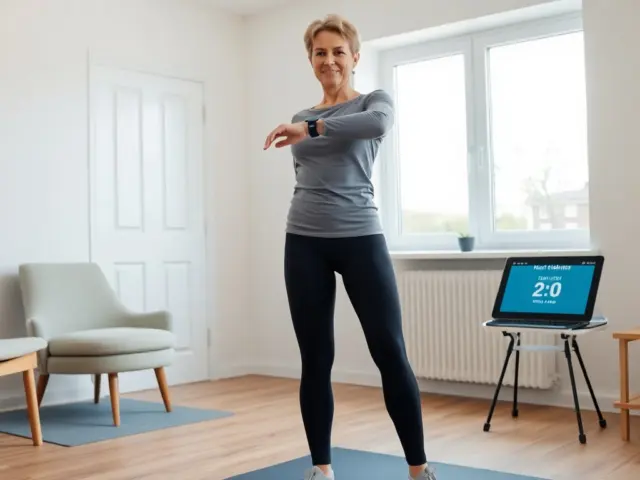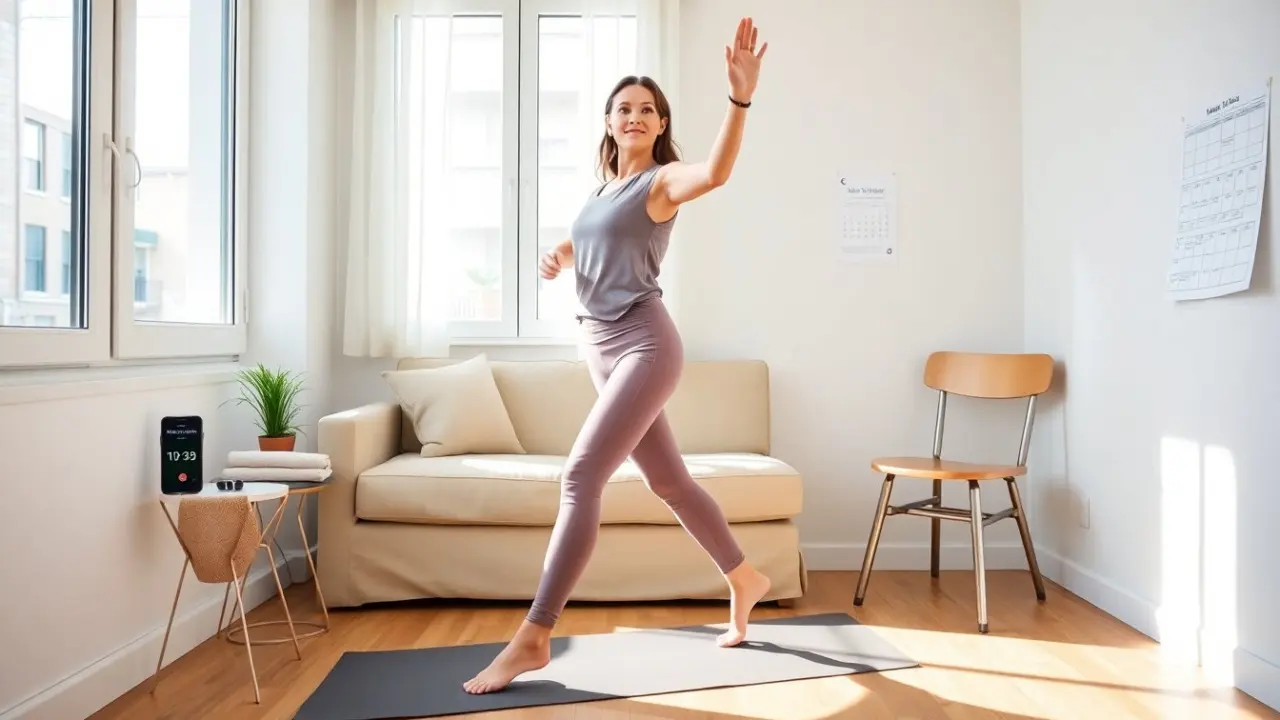
A morning exercise routine for beginners at home starts the day with energy. The routine uses simple moves and clear steps. It asks little time and no gear. It helps improve mood, focus, and mobility. It fits small spaces and busy schedules. The plan sets realistic goals and builds a habit in four weeks.
Key Takeaways
- A morning exercise routine for beginners at home energizes your day, improves mood, and fits busy schedules without needing equipment.
- Start with a 3-minute warm-up including marching, arm circles, and hip hinges to safely prepare your body and reduce injury risk.
- Follow a 20-minute full-body routine divided into four focused blocks: legs and balance, upper body and posture, core and stability, and low-intensity cardio with mobility.
- Use modifications and progressions to safely adjust intensity, ensuring proper form and avoiding common mistakes like fast reps or skipping warm-ups.
- Track your sessions and set realistic goals by scheduling three to five workouts weekly, celebrating small wins to build a lasting habit.
- Enhance consistency with reminders, rewards, and social support to make the morning exercise routine for beginners at home enjoyable and sustainable.
Why Morning Movement Matters And How To Set Realistic Goals
Morning movement helps the body wake and the brain focus. People who move early report better mood and steady energy. A morning exercise routine for beginners at home reduces stiffness and raises heart rate safely. To set realistic goals, a beginner chooses frequency, time, and intensity. They aim for three to five sessions per week. They start with 20 minutes and add five minutes every two weeks. They track workouts in a simple calendar. They celebrate small wins, like three consecutive sessions.
Quick 3‑Minute Warm‑Up To Wake Your Body Safely
A short warm-up prepares muscles and heart for exercise. People follow three moves for three minutes. Move one: March in place for 60 seconds. Move two: Arm circles for 45 seconds (20 seconds forward, 25 seconds back). Move three: Hip hinges for 75 seconds, slow and controlled. Each person keeps a steady breath and light pace. They stop if they feel sharp pain. This warm-up lowers injury risk and helps maintain form in the main routine.
Beginner 20‑Minute Full‑Body Routine (Follow‑Along Structure)
The main routine splits into four blocks. Each block lasts five minutes. Block one focuses on legs and balance. Block two targets upper body and posture. Block three works core and stability. Block four finishes with low‑intensity cardio and mobility.
People keep each exercise between 30 and 45 seconds. They rest 15 to 30 seconds between moves. They aim to keep a steady breathing pattern. They lower intensity when needed. This beginner 20‑minute morning exercise routine for beginners at home helps build strength and stamina with safe progression.
Routine Exercises — Reps, Timing, And Form Tips
Routine Exercises, Reps, Timing, And Form Tips
Legs and balance
- Bodyweight squats: 35 seconds on, 25 seconds rest. They sit back, keep chest up, and push through heels.
- Alternating reverse lunges: 40 seconds on, 20 seconds rest. They step straight back and keep knee over ankle.
Upper body and posture
- Incline push-ups (hands on table or counter): 40 seconds on, 20 seconds rest. They keep a straight line from head to hips.
- Standing rows with band or towel: 35 seconds on, 25 seconds rest. They pull elbows back and squeeze shoulder blades.
Core and stability
- Dead bug: 40 seconds on, 20 seconds rest. They press low back to floor and move opposite arm and leg.
- Plank hold (knees or toes): 45 seconds on, 15 seconds rest. They align ears, shoulders, hips.
Cardio and mobility
- March or low jog in place: 45 seconds on, 15 seconds rest.
- Standing hip and chest opener: 60 seconds total. They inhale to open chest and exhale to relax hips.
Form tips
- They watch the joint that matters most for each move.
- They keep tempo controlled and avoid fast, sloppy reps.
- They stop if form breaks or pain starts. This approach helps steady progress in a morning exercise routine for beginners at home.
Modifications, Progressions, And Common Mistakes To Avoid
Beginners need simple choices to stay safe and improve. Modifications make moves easier. People drop to knee push-ups or shorten plank time. They step back from lunges and use a chair for balance. Progressions increase challenge. People add seconds, increase reps, or try full push-ups. They also add a light household weight.
Common mistakes
- Moving too fast. Fast reps break form and raise injury risk.
- Shallow range. People often avoid full range and miss gains.
- Skipping warm-ups. That step lowers safety and performance.
To adapt, people track form and adjust load. They prefer steady improvements over sudden jumps. They review progress every two weeks and update goals. This keeps the morning exercise routine for beginners at home safe and useful.
Practical Schedule, Tracking Tips, And Motivation Hacks For Consistency
A clear schedule helps build habit. People pick specific days and times for the routine. They use simple rules: three sessions per week minimum and one extra session if time allows. They set reminders on a phone or place workout clothes by the bed.
Tracking tips
- Log date, duration, and mood in a short note.
- Record small wins, like longer planks or more reps.
- Use a calendar with check marks to visualize streaks.
Motivation hacks
- Pair the routine with a reward, such as a favorite coffee after workouts.
- Invite a friend to join remotely or share progress.
- Change one variable every two weeks to avoid boredom.
These tactics make the morning exercise routine for beginners at home easier to keep. They turn a single effort into a steady habit.