Your knees object to running, but you still want cardio that works. A low impact cardio workout can: it raises your heart rate and challenges your lungs while sparing ankles, knees and hips. Effort, not impact, sets the intensity.
The routine below is a joint-friendly circuit with intensity options. If you are still building the habit, start with how to start working out.
What a low-impact cardio workout is, and what it is not
A low-impact cardio workout is exercise that raises your heart rate and tests your lungs while being easier on joints such as the ankles, knees and hips. Moves like marching, stepping, cycling or swimming replace jumping and pounding. Self adds the back to the list of areas that are not pounded. Healthline notes that low-impact circuits can build cardiovascular endurance, and it also lists strength and balance among their benefits.
Most confusion comes from the word “low”. It describes the load on your joints, not the effort you put in. The table separates three common assumptions from what the evidence supports.
| Common assumption | What is supported | Planning use |
|---|---|---|
| Low-impact means easy | The intensity can be sky high, and you can send your heart rate through the roof if you go hard enough | Set the difficulty with pace, work time and resistance rather than by avoiding effort |
| It delivers less than high-impact cardio | Results are similar; the only real difference is what your joints go through | Choose the version your joints tolerate, since the one you can repeat is the one that helps |
| It does not challenge the heart and lungs | It raises heart rate and tests the lungs | Expect to feel breathless at harder efforts, not just warm |
These points come from the Cleveland Clinic’s guide to low-impact cardio.
Fat burning: what actually matters
Low-impact cardio can support fat loss because it gives results similar to high-impact work. Its advantage is lower joint stress, which makes regular sessions easier to sustain. The Cleveland Clinic says the only real difference between the two is what your joints go through, so impact itself is not what drives results.
A brisk pace is what makes a session count. Smarter Fitness advises that you still maintain a brisk pace to reap cardiovascular benefits, even without jumping. A casual stroll through the routine below will feel pleasant but will not do the same job. No source in this pack gives a calorie figure for this routine, so treat any specific burn number you see elsewhere with caution and judge progress by consistency and effort.
The 20-minute routine
Healthline’s low-impact circuit uses six exercises of 1 minute each, repeated three times for a workout lasting around 20 minutes. Begin with a warm-up of 5 minutes, such as walking, cycling or dynamic stretches. Low-impact jumping jacks are another good option, since they increase blood flow. Rest for 1 to 2 minutes between rounds, then start the circuit again.
| Stage | Time | Example moves | Planning use |
|---|---|---|---|
| Warm-up | 5 minutes | Walking, cycling or dynamic stretches | Raises blood flow before the circuit starts |
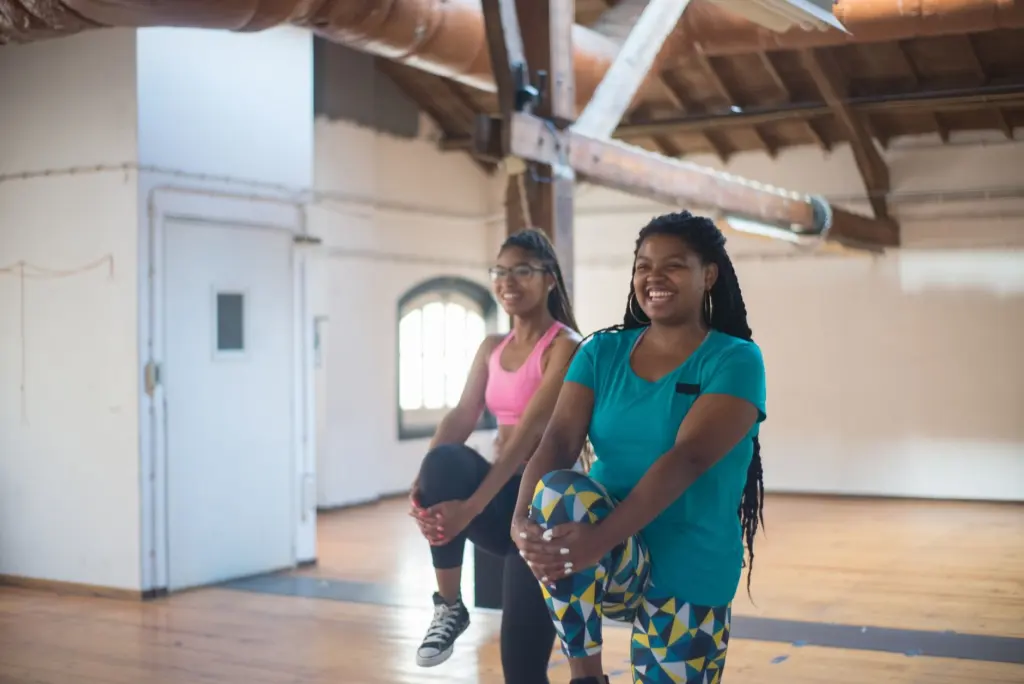
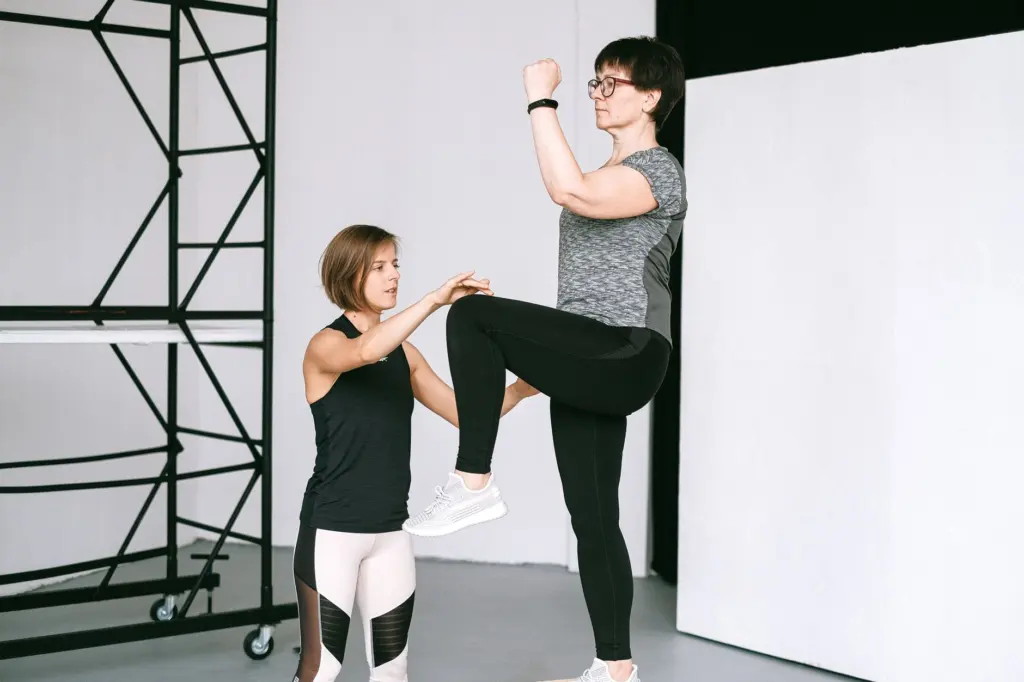
| Circuit, moves 1 to 3 | 1 minute each | Step-touch with arm reach, standing knee lift, side step with low squat | Keep feet close to the floor and the pace brisk |
| Circuit, all moves | 1 minute each | Low-impact skater step, standing march with arm swing, standing bicycle crunch | Move straight into the next exercise without pausing |
| Rest between rounds | 1 to 2 minutes | Walk slowly or stand and breathe | Use the longer rest when the first round felt hard |
| Rounds | Three, around 20 minutes | Repeat the six moves in the same order | The full circuit is the main workout |
| Cool-down | Easy pace | Slow march, gentle stretches | Helps recovery after the session |
The timings follow Healthline’s low-impact circuit, and the cool-down advice follows Smarter Fitness; the example moves are interchangeable low-impact options.
If you prefer longer blocks to a repeating circuit, Smarter Fitness offers a no-equipment sample that divides 20 minutes into eight blocks of 2 to 3 minutes each. That format suits people who find a minute-by-minute change of move hard to follow. Stop any movement that causes severe discomfort, as Healthline advises, and swap it for a gentler version.
Intensity options
Adjust difficulty by changing how hard you work, not how hard your joints land. These options all keep the routine joint-friendly.
- Faster pace. Self suggests increasing the speed of each exercise while keeping good form. Speed up only as far as your movement stays controlled.
- Longer work, shorter rest. Self also lists longer work intervals and shorter rest periods as a way to raise cardio demand. Change one of the two at a time so you can tell which helped.
- Added resistance. Healthline suggests soup cans, dumbbells, ankle weights or resistance bands. Household items work fine to begin with.
- Stepping instead of jumping. Burpees become low-impact when you step your feet in and out rather than jump, according to Self. This keeps a demanding move available without the landing.
- Walking inclines. The Cleveland Clinic notes that walking inclines can boost the cardio component. If you walk indoors, the guide to Best Walking Pads For Home: Compact, Quiet Cardio You’ll Actually Use In 2026 – Wholebodyreboot covers a compact way to do it.
If balance is your main concern and you want something slower than this circuit, Tai Chi Walking For Seniors: Gentle Balance, Strength, And Mobility Exercises For 2026 – Wholebodyreboot is a gentler alternative.
Progression and tracking
Progress gradually. Smarter Fitness recommends starting with shorter sessions and increasing intensity or duration step by step, and the option list above gives you the levers. A sensible order is to complete the circuit comfortably, then shorten rests or add resistance, and only then speed up.
Weekly volume gives you a target. The Cleveland Clinic reports that the American Heart Association recommends at least 150 minutes of moderate-intensity cardio exercise every week. That is a minimum goal to build toward over time, not something to attempt in your first week. Reaching it can combine this routine with walking, cycling or swimming.
To track effort, use a fitness tracker to monitor your heart rate during sessions, as Smarter Fitness suggests. Watching your heart rate settle faster at the same pace is a practical sign that fitness is improving. Warm up before each session to prepare your muscles and joints, and cool down afterward to aid recovery.
Frequently asked questions
| Question | Answer |
|---|---|
| What if I cannot complete a full minute of a move? | Take a short break and continue when you are ready, as Healthline advises. Finishing the round matters more than holding every minute without a pause. |
| When should I stop a move? | Stop a movement that causes severe discomfort, according to Healthline. Replace it with a gentler variation rather than pushing through. |
| Is walking really easier on joints than running? | Yes. The Cleveland Clinic says walking is a lot less abuse for your joints than running, so it suits people who want a lower-stress option. |
| Can cycling or swimming count as low-impact cardio? | Yes. Cycling keeps your weight off your feet, and water works to reduce the effect of your body weight on your joints, according to the Cleveland Clinic. |