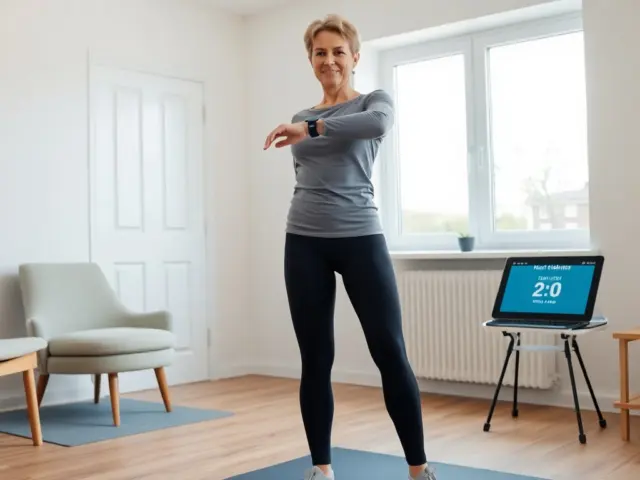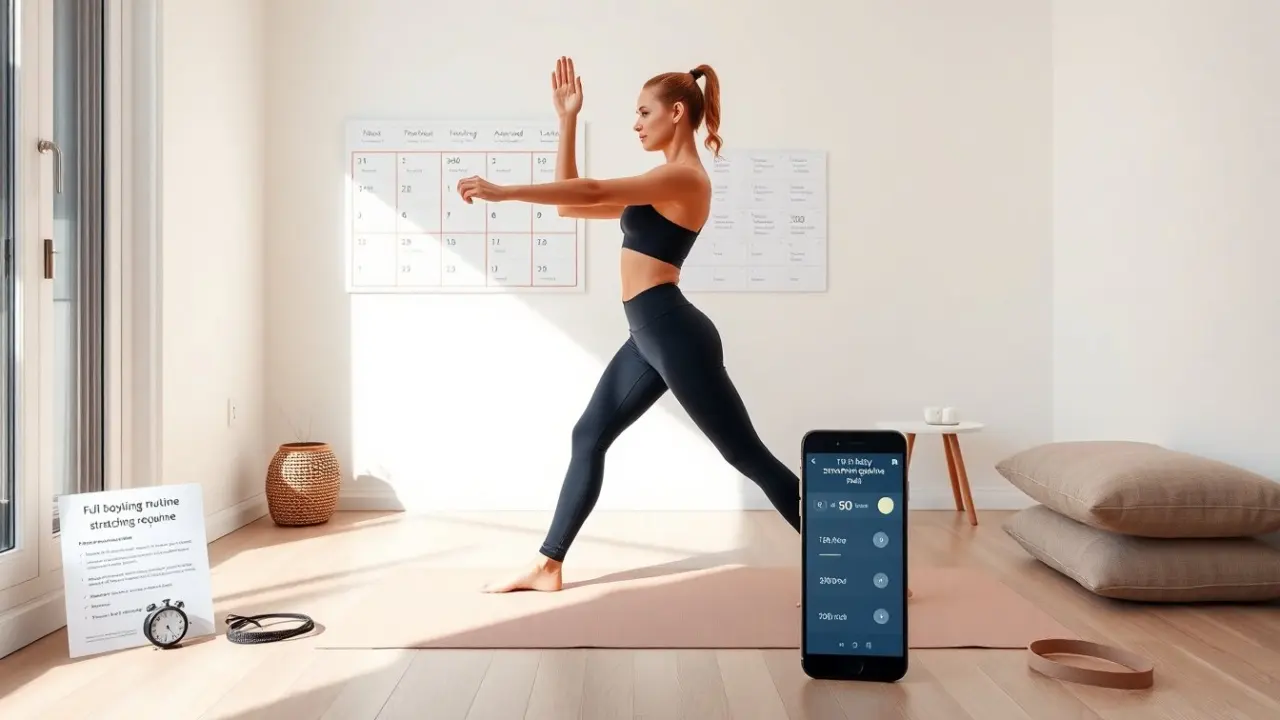
The full body stretching routine pdf gives a clear 10-minute plan. It lists warm-up moves, standing and seated stretches, and timing. The reader can print the PDF and follow it daily. The file fits a phone or a printer. The routine targets major muscle groups and helps reduce stiffness and mild pain.
Key Takeaways
- The full body stretching routine PDF offers a clear, printable 10-minute plan targeting major muscle groups to reduce stiffness and mild pain.
- The routine divides stretches into warm-up, standing, seated, and cool-down sections with detailed timing and safety tips for all levels, from beginner to advanced.
- The PDF includes step-by-step instructions with images, breathing cues, and modifications to accommodate common conditions like low back, shoulder, and knee pain.
- Daily use of the routine, supported by the PDF’s progressions and tracking checklist, helps improve flexibility and monitor pain and comfort levels effectively.
- The PDF emphasizes safety, recommending slow movements, stopping if sharp pain occurs, and consulting professionals when needed to ensure a safe stretching practice.
What’s Included In The Printable Full-Body Stretching PDF
The printable full body stretching routine pdf lists ten moves. Each move shows a name, an image, and a hold time. The file gives a simple order. The file gives notes on breathing. The file gives brief safety tips for common conditions. The PDF notes when to stop and when to seek a professional.
The PDF divides moves into warm-up, standing, seated, and cool-down. The warm-up section shows two light mobility drills. The standing section shows hip, hamstring, chest, and calf stretches. The seated section shows lower back and glute stretches. The cool-down section shows two gentle full-body stretches.
The printable full body stretching routine pdf gives timing guidance. It sets 30 to 60 seconds per stretch for most people. It shows progressions over four weeks. It suggests three levels: beginner, intermediate, and advanced. It suggests frequency: daily or five times per week. It also lists common mistakes to avoid, such as bouncing or holding breath.
The PDF includes a quick checklist for tracking progress. The checklist asks the reader to note pain levels before and after the routine. The checklist asks the reader to log tight areas and improved range. The PDF offers a page for notes and simple calendar stickers. The PDF aims to make consistent stretching easier.
10-Minute Full-Body Stretching Routine (Step-By-Step)
The 10-minute routine in the full body stretching routine pdf breaks time into blocks. It gives a clear order and exact timing. The routine starts with two minutes of warm-up. The routine lists each stretch with a short cue and a time.
- Arm circles, 30 seconds. The person stands and swings both arms in small circles. The person breathes slowly. The person increases circle size after 15 seconds.
- Neck side stretch, 30 seconds each side. The person drops the ear to the shoulder. The person keeps the shoulder down. The person avoids pulling with the hand.
- Standing hip flexor lunge, 60 seconds total. The person steps forward and drops the back knee. The person tucks the pelvis and holds. The person switches sides at 30 seconds.
- Standing hamstring reach, 45 seconds each side. The person reaches toward the toes with a flat back. The person bends the knee slightly if needed. The person keeps the other leg stable.
- Chest opener against a wall, 45 seconds. The person places the forearm on a wall and rotates the torso away. The person keeps the body tall and breathes.
- Seated figure-four glute stretch, 60 seconds each side. The person sits and crosses one ankle over the opposite knee. The person leans forward with a straight spine. The person breathes into the stretch.
- Seated spinal twist, 45 seconds each side. The person sits and twists gently toward the back of the chair. The person uses the hands for light guidance. The person avoids forcing the twist.
- Calf stretch on a step, 45 seconds each side. The person places the ball of the foot on a step and drops the heel. The person keeps the knee straight for the deep stretch and bends it for a soleus variation.
- Supine hamstring stretch with strap, 60 seconds each side. The person lies on the back and lifts one leg. The person uses a strap to keep the leg long. The person keeps the opposite leg flat.
- Full-body lying stretch, 60 seconds. The person lies on the back and reaches fingers overhead while pointing toes. The person breathes slowly and relaxes.
This order appears in the full body stretching routine pdf. The routine moves from larger to smaller muscles and from standing to lying positions. The routine aims to reduce stiffness and to restore comfortable range of motion.
Tips, Modifications, And Progressions For Safe Daily Stretching
The PDF gives clear safety advice. The reader should warm up before deep stretches. The reader should move into each stretch slowly. The reader should stop if sharp pain appears. The reader should ease off if a joint feels unstable.
Modifications appear in the full body stretching routine pdf. The PDF shows hands-on variations and props. The PDF suggests a strap for tight hamstrings. The PDF suggests a chair for seated options. The PDF suggests a wall for balance during standing moves. The PDF gives gentler hold times for beginners.
Progressions appear in small steps. The PDF suggests increasing hold time by 10 seconds every two weeks. The PDF suggests adding one extra hold per day after four weeks. The PDF suggests widening the range gradually. The PDF suggests moving from a supported position to an unsupported one when comfort improves.
The PDF gives guidance for common conditions. For low back pain, the PDF emphasizes gentle core activation and avoids deep forward bends. For shoulder pain, the PDF emphasizes range work below pain level and avoids heavy overhead positions. For knee pain, the PDF instructs to reduce lunge depth and to use a cushion under the knee.
The full body stretching routine pdf encourages simple tracking. The PDF asks the reader to mark comfort levels on a 1–10 scale. The PDF asks the reader to note if pain decreases after two weeks. The PDF asks the reader to adjust intensity based on daily symptoms.
The PDF ends with a short safety reminder. The reader should consult a health professional for persistent or worsening pain. The reader should pause the routine if a new sharp pain starts. The PDF presents clear next steps if the reader needs professional care.