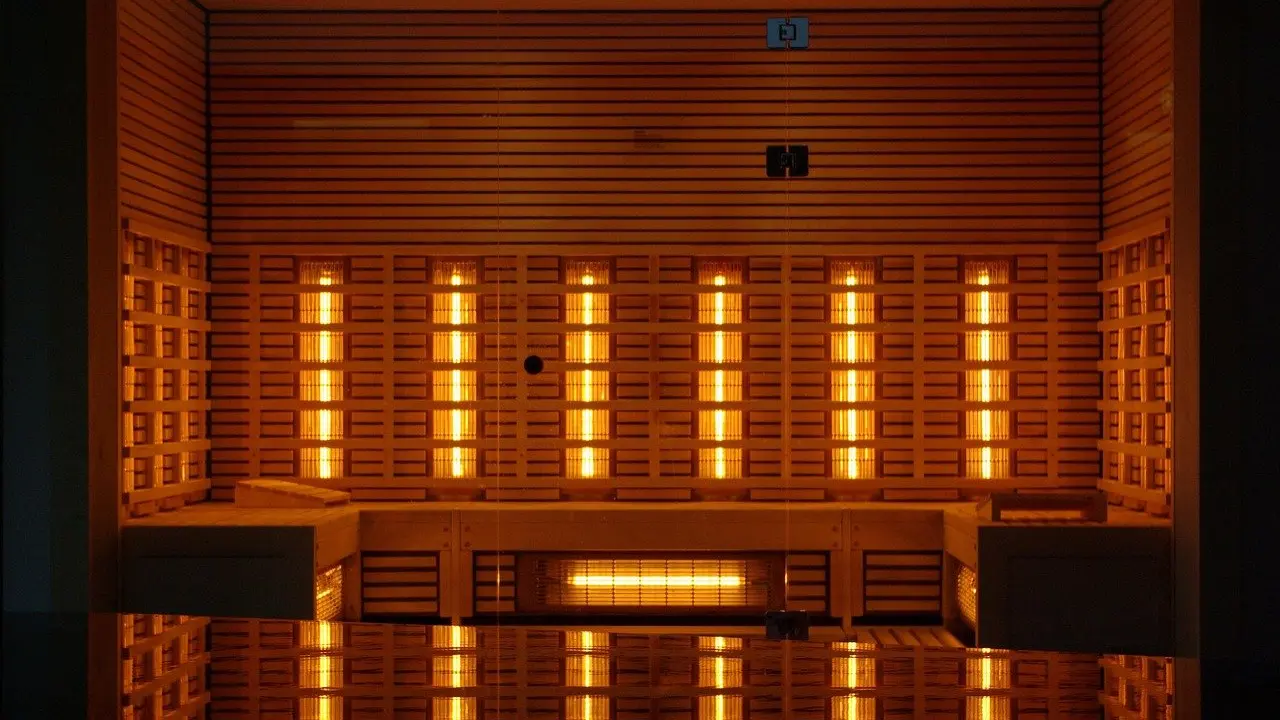
You have heard that infrared saunas detox the body and melt fat. The supported benefits of infrared sauna are narrower: possible circulation and blood pressure effects, some muscle recovery and short-term joint relief, if you are cleared to use heat.
Heat is only one part of recovery, so read this alongside the wider whole body reset approach, then use the sections below to separate what holds up from what is marketing.
Infrared versus traditional heat
The practical difference is what gets heated. A traditional Finnish or banya sauna heats the air to 160–190°F, according to a sauna benefits guide, and WebMD puts the usual traditional temperature at around 160 F. An infrared cabin works on the body more directly, so you sweat at air temperatures of about 120 to 150°F, and some full-spectrum models reach up to 170°F, as an infrared sauna explainer describes.
Far infrared is the band most cabins advertise. It covers wavelengths of about 3 microns and longer and heats the outermost layer of skin. That is worth remembering when a brochure promises heat that “reaches deep into muscle”: the supported description is surface warming that lets you sweat at a lower air temperature than a traditional sauna needs.

| Setting | Typical value | Planning use |
|---|---|---|
| Infrared cabin air temperature | About 120 to 150°F | The usual range to expect from a standard infrared cabin. |
| Full-spectrum infrared models | Up to 170°F | Check the display before you start, because some models run hotter than the standard range. |
| Traditional Finnish or banya sauna air | 160 to 190°F | A comparison point only; do not carry traditional timings over to infrared. |
| Typical infrared session | 15 to 30 minutes | The normal working range once you are used to the heat. |
| Beginner infrared session | 10 to 15 minutes | Enough for a first visit. |
Air temperatures and session lengths come from an infrared sauna explainer and a sauna benefits guide.
Choosing between infrared and traditional
A milder cabin is not a risk-free one, and the safety checks later in this guide apply to any sauna. Which type suits you depends on what you want from the session.
- You find very hot air hard to tolerate. Infrared lets you sweat at a lower air temperature, so it is the easier starting point.
- Your main interest is blood pressure or heart health. Most of the research on those outcomes involves traditional saunas, so an infrared benefit is plausible rather than shown.
- You want help recovering after training. The small studies that exist test far infrared sauna after exercise, which makes infrared a sensible choice here.
Benefits, ranked by how well the evidence holds up
The benefits of infrared sauna are real but modest, and most of the research is small studies or work on traditional saunas. Each benefit below carries a different level of confidence, so weigh them separately rather than as a package.
Circulation and blood pressure
This is the area with the most research behind it, but not much of it is specific to infrared. WebMD reports that regular sauna use combined with exercise reduces the risk of cardiovascular disease, without giving a percentage, and that several studies have linked traditional sauna use to reduced blood pressure. Because those blood pressure findings come mainly from traditional saunas, treat an infrared effect as plausible, not established.
Muscle recovery
Small studies of far infrared sauna after exercise show faster recovery and less soreness, although results vary between studies, according to the infrared sauna explainer. That makes recovery a reasonable thing to try for people who train regularly, as long as you judge it by how you feel rather than expecting a guaranteed result.
Joint pain
The evidence here is limited. The same explainer notes short-term relief with no adverse effects in small trials of people with rheumatoid arthritis and ankylosing spondylitis. Those were small trials and the relief was short-lived, so a sauna is best seen as a comfort measure to discuss with your clinician, not a treatment for a joint condition.
Claims that go further than the evidence
Two popular promises fall outside what the evidence supports.
- Detox. Sweat removes only trace amounts of metals and chemicals, so a session is not a meaningful way to clear them from the body.
- Weight loss. Most weight lost in a session is water, and it returns when you drink, so the scale reading after a session says little about fat.
Both points come from the infrared sauna explainer. Judge a sauna on whether you recover well and tolerate the heat, not on purification or weight. If calm or better rest is what you are really after, a sauna is a small lever, and Reset Your Nervous System: 9 Science-Backed Ways To Calm, Reboot, And Feel Better Fast (2026) – Wholebodyreboot and Sleep Smarter: 7 Practical Sleep Hygiene Tips For Teens To Feel More Rested In 2026 – Wholebodyreboot cover habit-based steps that do not depend on heat.
Session length and settings
Most infrared sessions run 15 to 30 minutes, according to the infrared sauna explainer. A sauna benefits guide says 10 to 15 minutes is plenty for a first session, with regular users building to 30 to 40 minutes.
Start at the short end and add time only when the heat feels comfortable. The 30 to 40 minute figure is where experienced users end up, not a goal to reach. Check the temperature display before you begin, since full-spectrum models can reach up to 170°F. If recovery is your aim, schedule sessions after training, because the small muscle studies tested sauna use after exercise.
Who should avoid infrared sauna
Several groups should talk to a doctor before using any sauna, infrared included. The infrared sauna explainer lists these situations:
- Pregnancy. Get medical advice before starting.
- A heart condition. Your doctor can say whether heat exposure suits you.
- Low blood pressure, or blood pressure medication. Sauna use has been linked to lower blood pressure, so this is where a medical check matters most.
WebMD adds that drinking alcohol, taking drugs, or taking medications that affect how the body handles temperature makes sauna use riskier. If any of this applies to you, ask before booking a cabin or buying one for home.
Frequently asked questions
| Question | Answer |
|---|---|
| Does infrared sauna use matter if I am trying to conceive? | Yes. Regular heat exposure can temporarily lower sperm counts, according to the infrared sauna explainer, so raise it with a doctor if you are planning a pregnancy. |
| What is Waon therapy? | WebMD describes it as 15 minutes in an infrared sauna, typically set at 140 F, followed by 30 minutes of resting. Treat it as one documented protocol, not a required formula. |
| Can an infrared sauna replace exercise? | The evidence does not support that. The cardiovascular risk reduction WebMD cites was for regular sauna use combined with exercise, so a sauna is better treated as an addition to training. |